
German Progress Check
Part 1

Have you ever asked yourself: Is my German actually improving—or am I just memorising more random lists and dubiously useful vocab? If you’re learning alone, it’s certainly easy to hit a plateau. Well, today we’re going to end the guesswork. So, in this week’s video we’ve got a Progress Check, to see where you’re doing well and where you need some more practice. There’s a free Progress Check booklet to go with this post so you can tick off each task as we go, because today, I’ve got a three‑part challenge for you: there’s a speaking challenge, a targeted writing exercise, and a quick check to see if we really understood what we read. And there’s a self‑assessment rubric for you so you can get a really clear idea of where you’re at. So, no matter what your level is, there’s something for you here today. . You can find the link here and in this week’s YouTube video. And there’s an additional booklet (free for Paid Subscribers: You know who you are! Thank you all).
Get the FREE guide here LINK https://bausteine.gumroad.com/l/jmcri
Get the MODEL ANSWERS and Tips here LINK https://bausteine.gumroad.com/l/fftvek
Speaking Practice 1
First up. Let’s do some speaking practice. And, yes I’m going to put you on the spot. I want you to try it right now. Here’s 7 keywords—Stichwörter.
Name
Geburtsort/Land
Wohnort
Arbeit / Beruf
Familie
Sprachen
Hobbys
The idea is to introduce yourself, using these keywords, providing two pieces of information for as many of them as you can. In 60 seconds. Ready? Go….
Ok, so how did that go? Did you try it? Were you able to do that really easily? Or is it something you’ll need practice with in order to do this without too many ums and ahs and pauses and corrections? Check out the self assessment rubric in this week’s free guide.
Here’s an example of what one of my students said when trying this out:
Name: Hallo, ich heiße Tyson
Geburtsort: Ich komme aus Lilydale. Das ist eine kleine Stadt in der Nähe von Launceston im Norden von Tasmanien.
Wohnort: …aber ich wohne jetzt in Launceston, denn ich an der Uni studiere
Arbeit / Beruf: Ich arbeite abends bei Woolworths. Das ist ein Supermarkt in Mowbray im Norden von Launceston
Familie: Ich habe eine große Familie. Ich habe einen Bruder, und drei Schwestern, eine Mutter, einen Vater und viele Verwandte
Sprachen: Ich spreche Englisch, ein bisschen Italienisch und ich lerne jetzt seit einem Jahr Deutsch
Hobbys: Ich mache nicht so viel, denn ich arbeite und ich muss auch viel lernen. Ich habe nicht viel Zeit.
See how you go with this. Practise until you are able to do this without hesitating too much.
Speaking Practice 2
This is a really useful exercise. It’s one that you can do at any time. It involves describing what you see. We are going to do this by looking at a picture and describing 4 main things:
Wer ist das? describe the person as far as you can tell
Wo ist er /sie? you’ll be describing locations, so remember the dative
Was macht er/sie? we need some verbs and imagination
Warum ist er dort? more imagination needed to say why the person might be there
Wie ist das Wetter? This is a bit easier to finish off.
Ready to try it? Here’s a picture—or try it by looking up away from your computer / phone:)
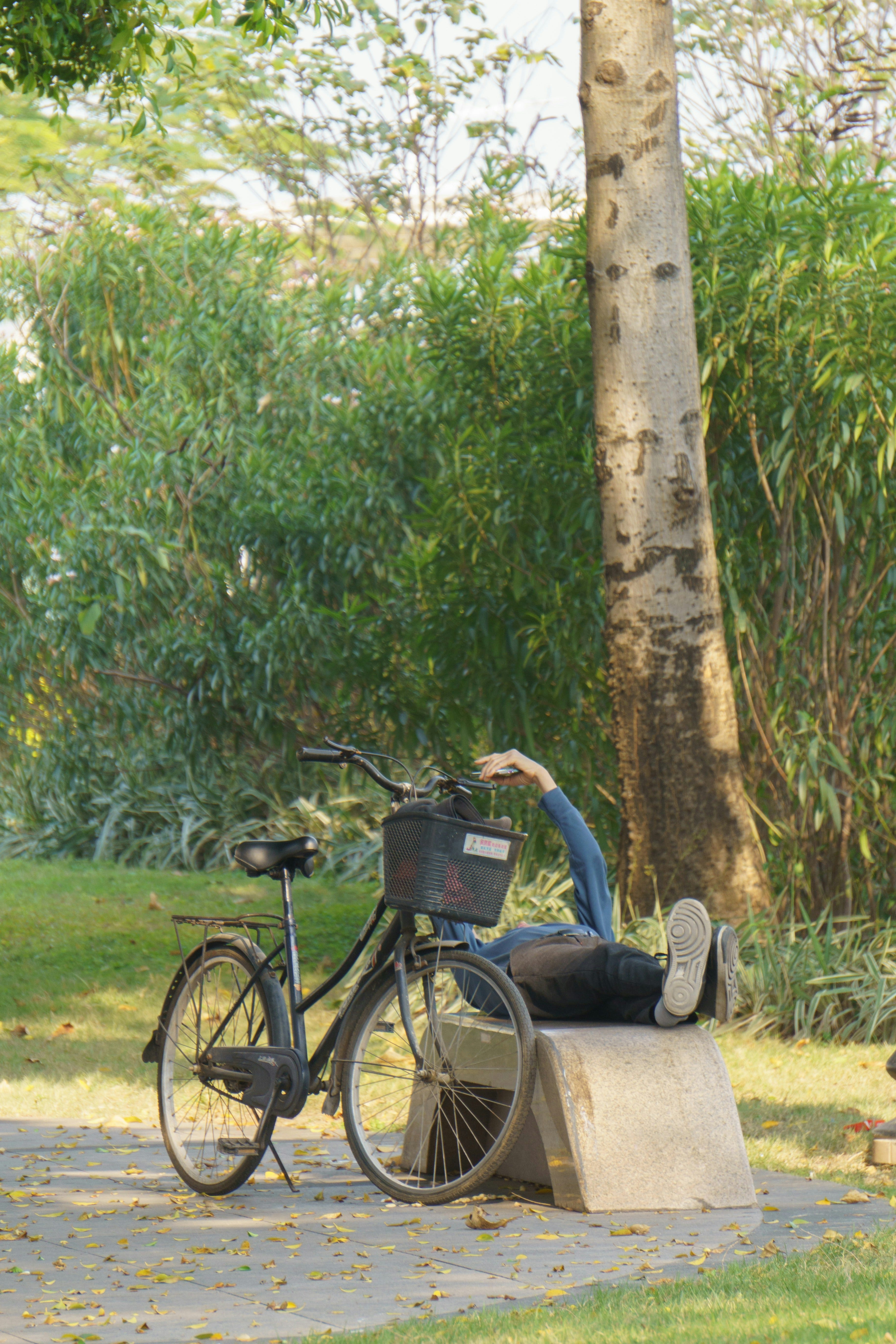
Here are some possible responses. You answers will no doubt vary:
Wer ist das? Ich sehe einen älteren Mann. Er trägt Turnschuhe, eine braune Hose und ein blaues Hemd
Wo ist er /sie? Er liegt auf einer Bank aus Beton
Was macht er/sie? Er ruht sich auf der Bank aus und schaut in sein Handy. Vielleicht schickt er eine Email
Warum ist er dort? Er entspannt sich, weil er ganz weit gefahren ist und es er müde geworden ist
Wie ist das Wetter? Das Wetter ist schön. Er ist sonnig, warm und windstill
There are more exercises and examples in this week’s guide.
Schreiben 1
If you’re anything like me, then you come from a place no one’s ever heard of. So if someone asks the question Woher kommst du? Chances are your answer won’t mean much to people.
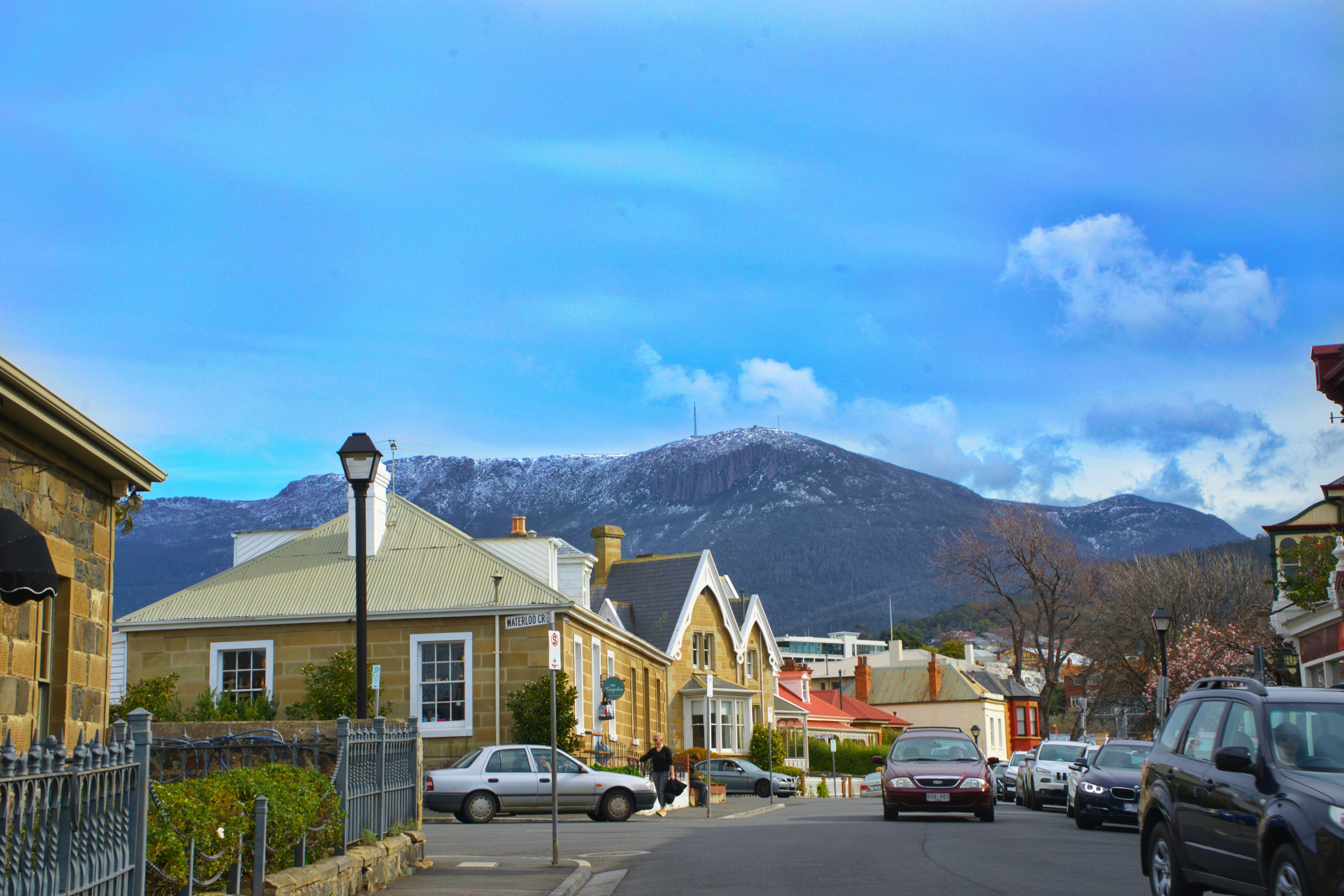
So if you do come from a smaller place, then you’ll need to be able to describe it, explain to people where it is, maybe even compare it to a place they’re familiar with. And that’s where this next challenge comes in.
We’re writing so we’ll have a bit more time to think. Here are some of the things that you can use to answer the seemingly simple question:
Woher kommst du?
I’ve listed the questions in our guide, but let me show you what we’re trying to achieve:
Woher kommst du? (or maybe Wo wohnst du?)
You might say: Ich wohne in Hobart. Whereupon you might well hear…
Wo ist das?
Yep, no one knows where that is, so I’ll need to say.
Das ist die Hauptstadt von Tasmanien im Süden von Australien.
So, capital city, sounds big, but I can let you know
Hobart hat 250.000 Einwohner, also ist es ungefähr so groß wie Kiel im Norden von Deutschland und wie Kiel liegt Hobart an der Küste.
This is a handy way to explain where you are from. Choose a place in the country where you are being asked this question and compare it to that.
XXX ist ziemlich klein. Vielleicht ungefähr so groß wie Fulda usw
Let’s get a bit more precise. Whereabouts in the city do I live?
Wo (in der Stadt) wohnst du?
Ich wohne in der Innenstadt in der Nähe von dem Hafen und dem botanischen Garten.
Using phrases like ‘in der Nähe von (+dative)’ are pretty useful, along with others like ‘im Norden / Süden / Westen von der Stadt’ (in the north / south or west of the city); or maybe ‘am Rand von’ (on the edge of). Or if you don’t live in the city but just outside it, you could say:
Ich wohne 20 Kilometer nördlich von …. 20km to the north of
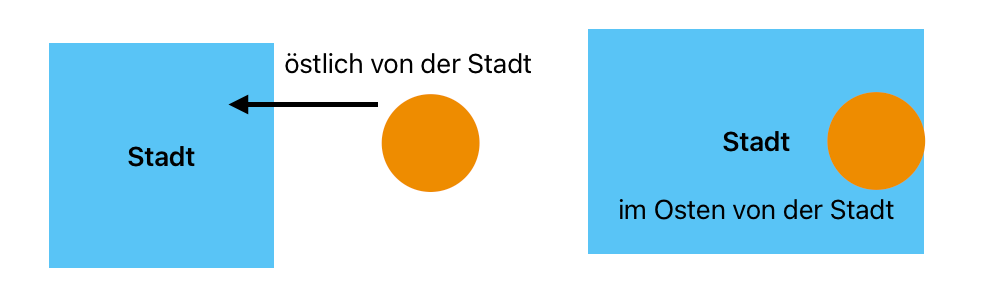
One way means you live to the East of the city, the other in the Eastern part of the city.
And we’ll also want to say how long we’ve been living there.
Ich wohne seit zwanzig Jahren dort, und es gefällt mir inzwischen sehr.
Notice that we are using the present tense.
Now there are a few more questions so check these out in the free guide and you’ll find a couple of examples in the model answers that you can also download from the link in the description, like this one from Innes. This is a really good authentic exercise so get lots of practise with this over the next couple of weeks.
There are a couple more exercises in the Free Guide, so don’t forget to check this out.
Get the FREE guide here LINK https://bausteine.gumroad.com/l/jmcri
Get the MODEL ANSWERS and Tips here LINK https://bausteine.gumroad.com/l/fftvek
I like this way of checking progress. It’s not always easy to know how well you’re doing when learning a language but having some tasks like this shows you how you’re doing and where the gaps are.